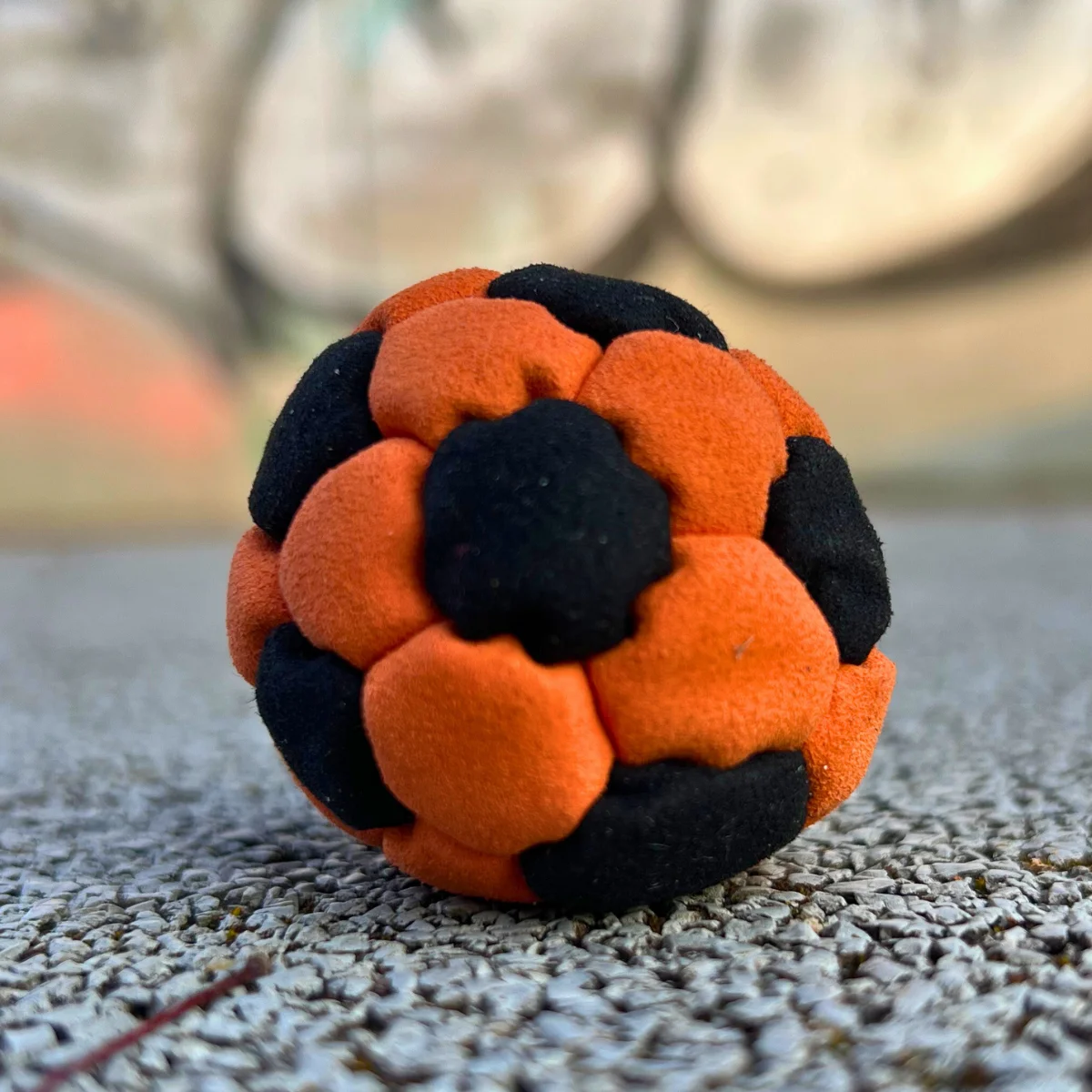
What is a hacky sack, and where did it come from?
A hacky sack is a small round pouch — plastic pellets, sand, rice, or similar inside — kept aloft with the feet. Related foot games are old (China’s jianzi among them). The modern US version was popularised in the 1970s by John Stalberger and Mike Marshall; “Hacky Sack” began as a brand name and became everyday shorthand for the game. The generic sport term is footbag.
Hacky sack vs other foot games: Freestyle / circle play focuses on solo tricks or shared keep-ups. Footbag Net is competitive — two sides over a net, volleyball-like rules, feet only. Net bags are usually firmer; classic circle bags stay softer and smaller, which helps beginners.
What kinds of hacky sacks exist?
Shells: cotton or synthetic cloth, leather / faux leather, crocheted yarn.
Fills:
- Plastic pellets — light, beginner-friendly
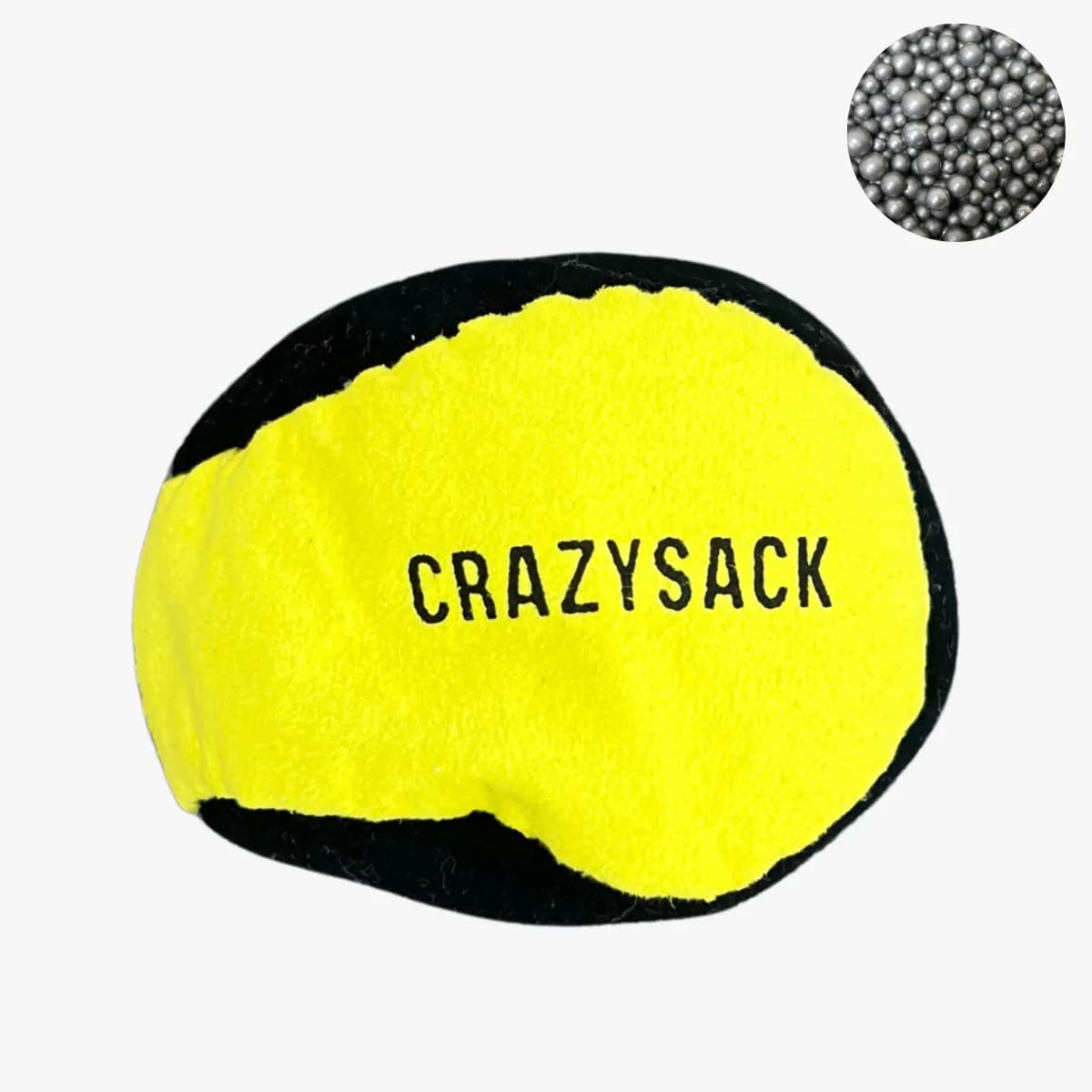
- Metal beads — heavier, more precise for advanced play
- Sand or rice — stable on the foot, easy to feel
Panels: 4–6 panels tend to be tougher starter builds; 14–32+ panels round out better for stalls and freestyle. Shape and colour are taste; seams and fill decide how it plays.
How do you play?
Basic rule: no hands (in classic circle), bag stays off the ground. Precision beats power.
Starter habits:
- Start standing with the bag on the foot
- Soft instep contacts first
- Smooth motion — frantic kicks dump the bag
Common early mistakes: kicking too hard and rushing. Progress to inside / outside kicks, stalls, and Around the World when those feel calm. Circles add teamwork and timing.
Why play at all?
Body: foot–eye coordination, lower-leg strength, balance, reaction — joint-friendly and open to people without a big sports background.
Mind & social: rhythm drops stress, focus rises, new tricks scratch creativity. Circles are easy icebreakers in schools and parks.
How do I pick the right bag?
Beginners: soft fill (pellets or sand), modest bounce, solid seams.
Advanced: higher panel counts (e.g. 32), often heavier metal fill for stalls and combos.
Quality tells: even roundness, balanced weight, seams that won’t split after a week. Compare real builds in our shop when you are ready.
Care and storage
Crochet: occasional lukewarm hand wash with mild detergent. Leather / faux leather: damp cloth only. Air-dry — not on a radiator. Don’t crush under heavy gear. Check for holes. A breathable pouch for travel; dry, shaded shelf at home. Rotating two bags slows wear.
Bottom line
Hacky sack mixes movement, coordination, and low-friction social play. Solo or in a circle, the entry cost is small and the skill ceiling is high. Grab a bag that matches your stage, practise short sessions, and let the rest grow from clean contact.
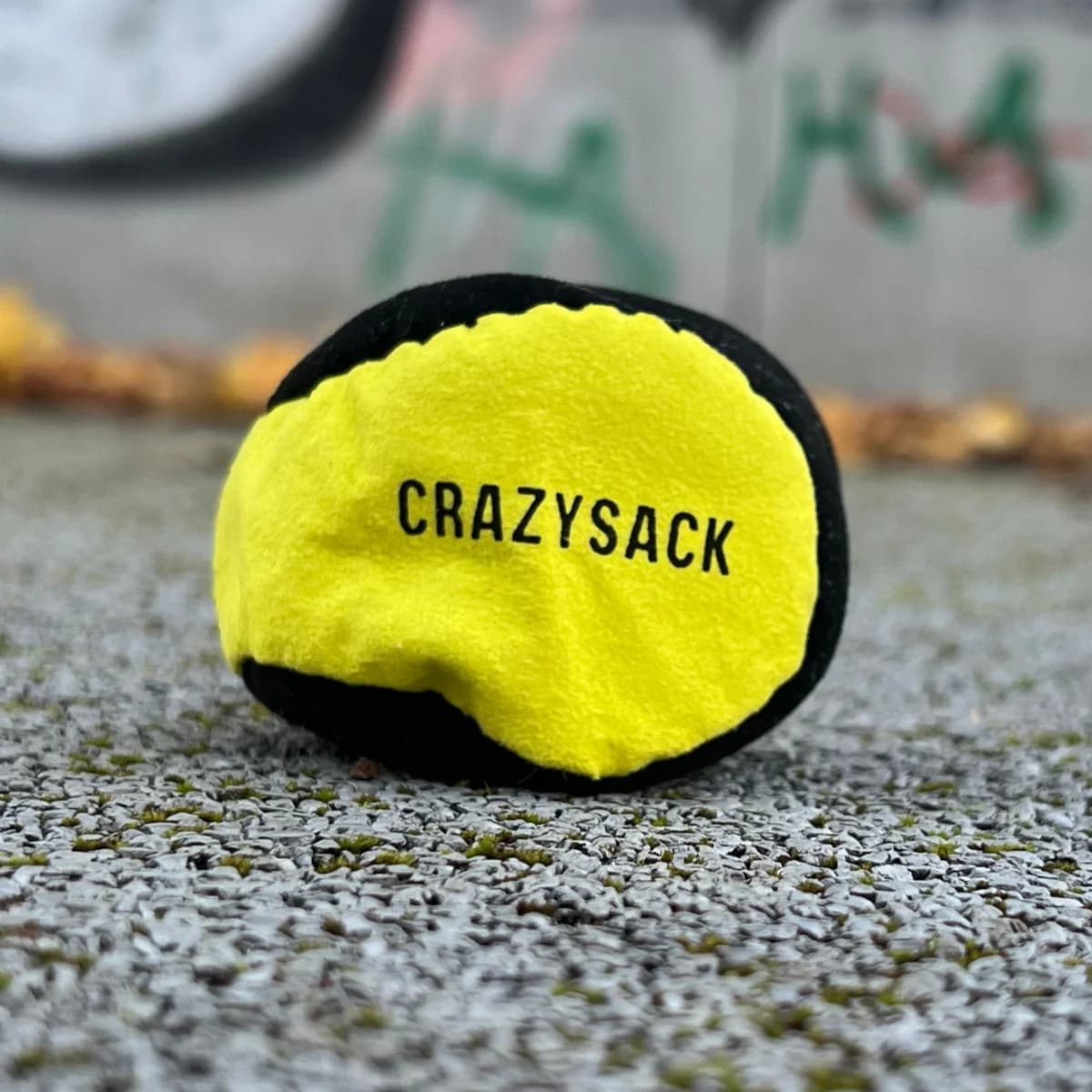
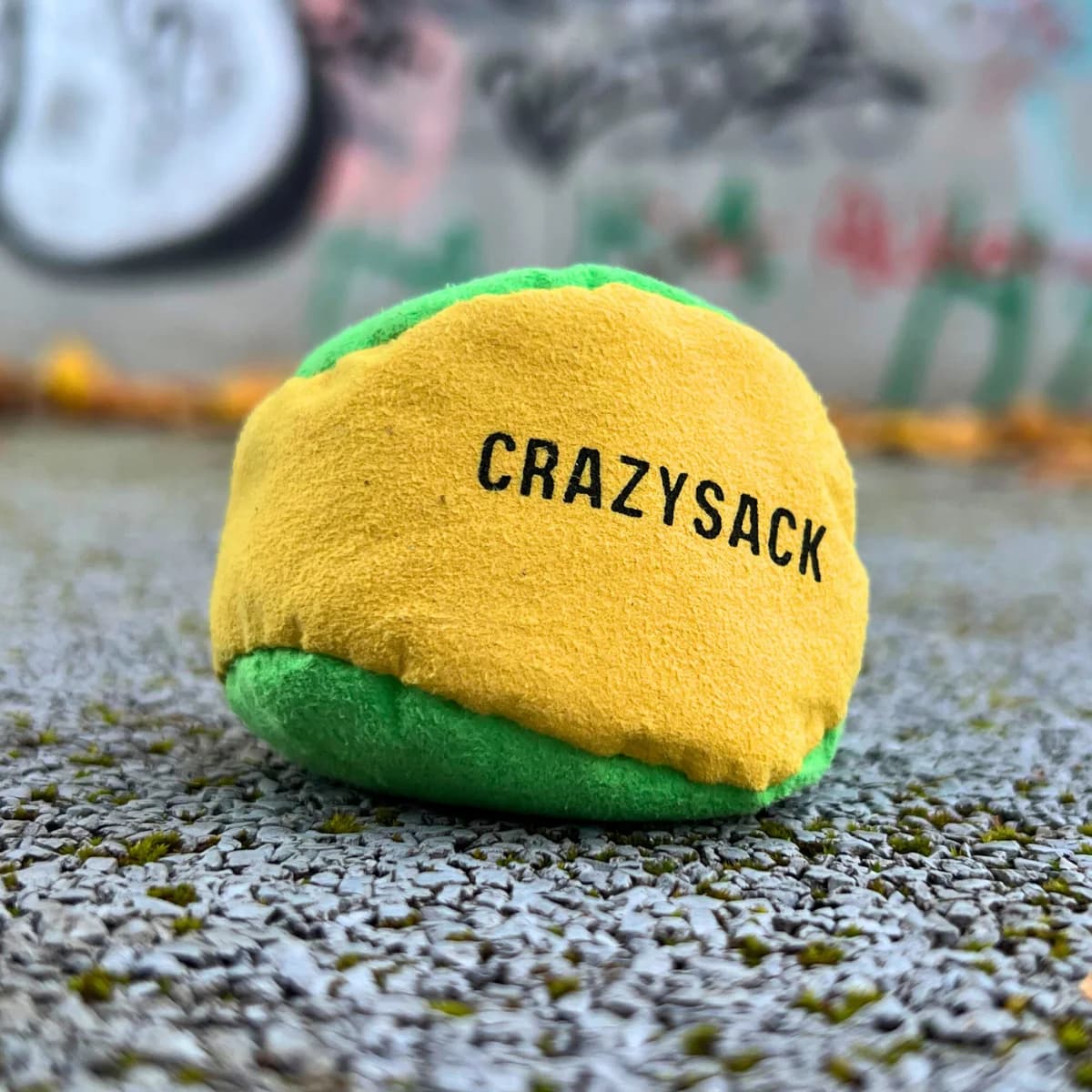
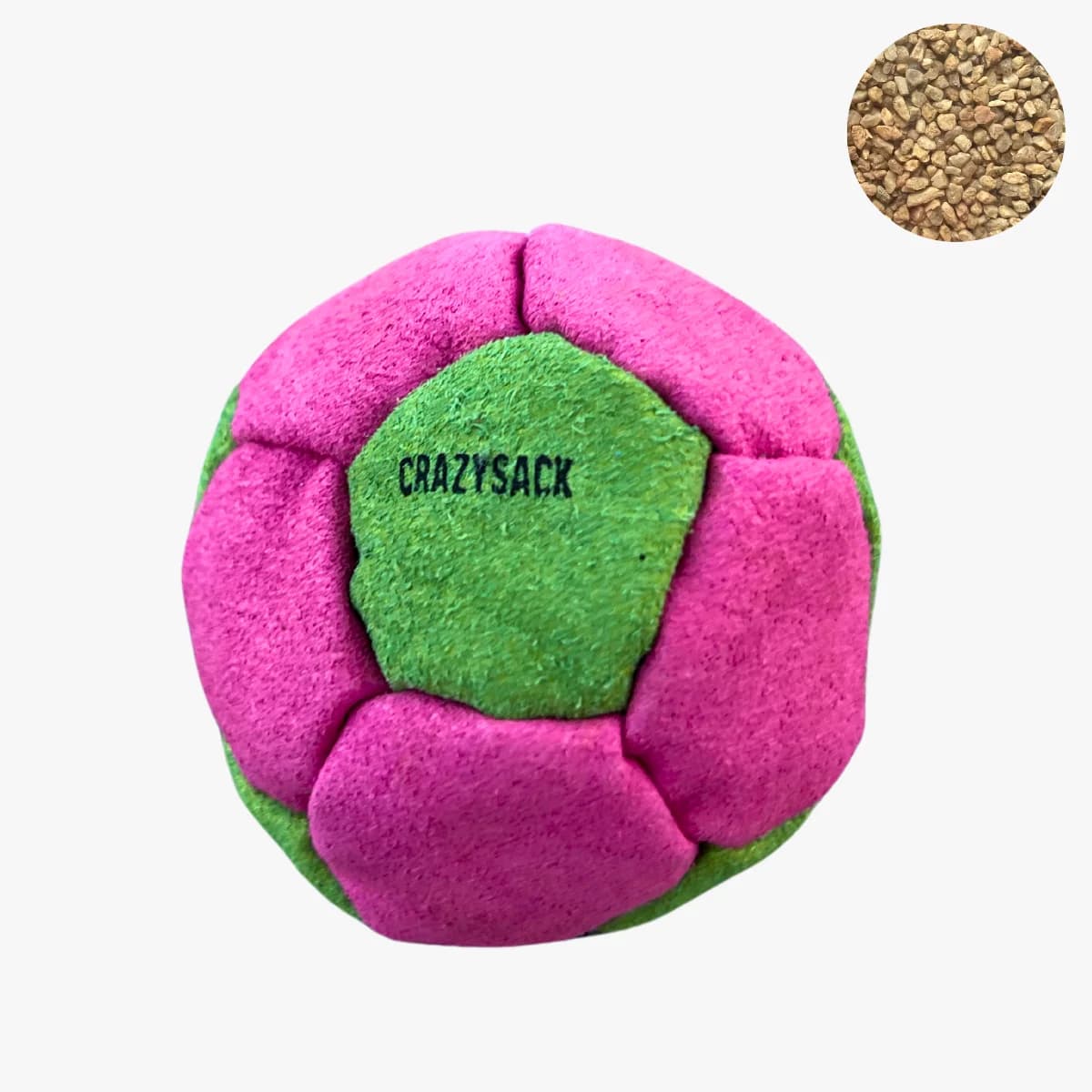
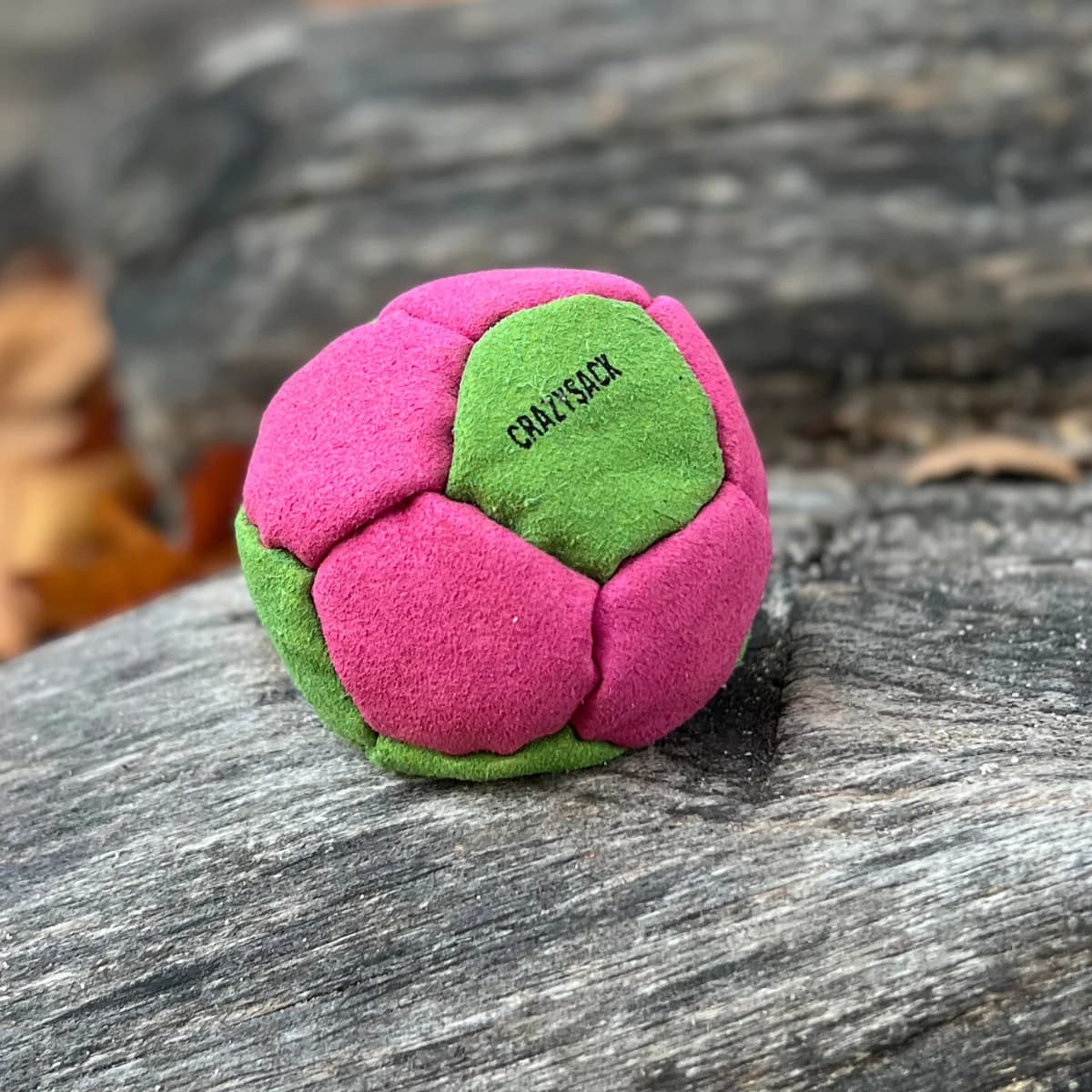
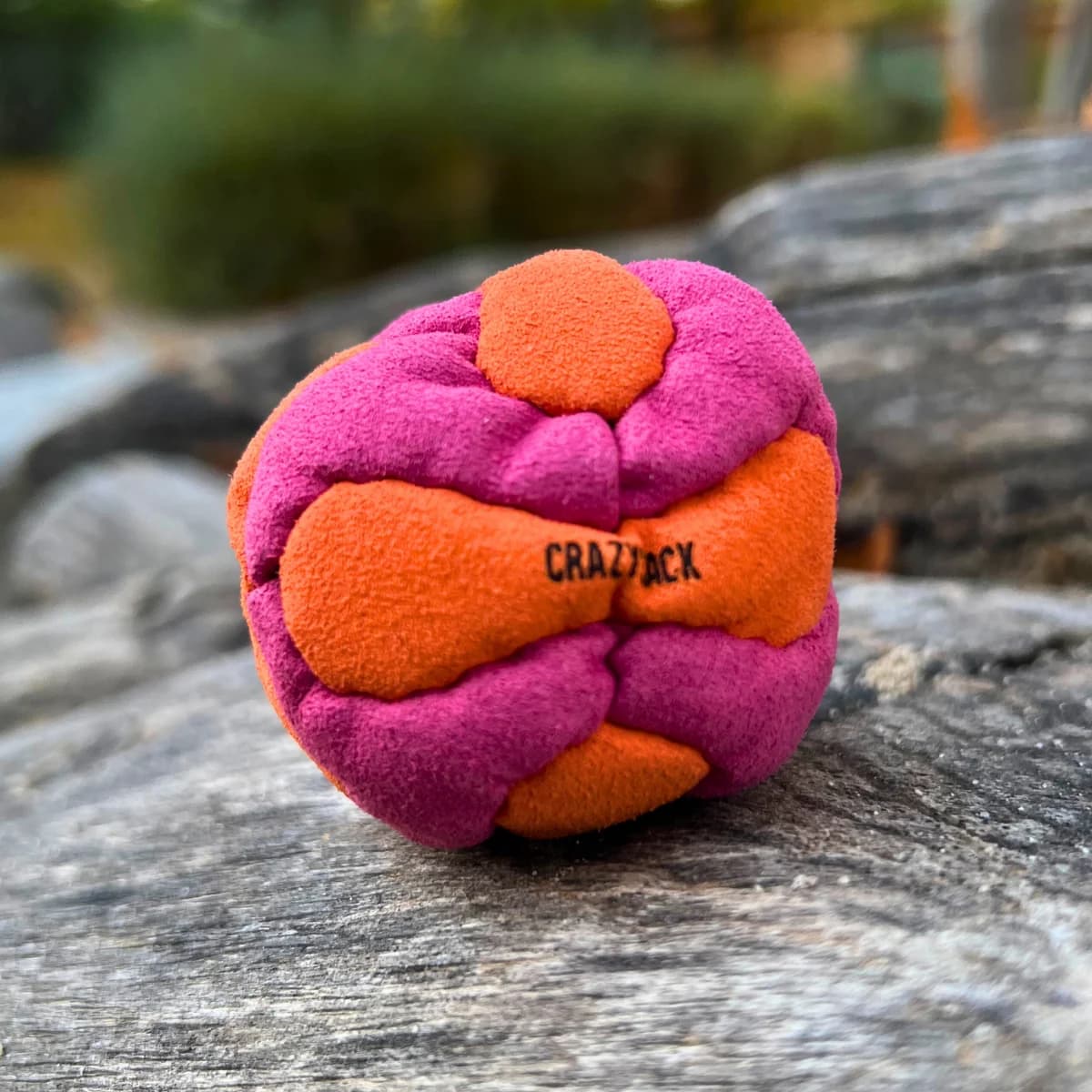
Matching footbags from our shop
Hand-stitched in Germany, ready to ship.


You might also like
Most Common Myths About Hacky Sacks
Not just park teens, not one bag type, not skill-free — five hacky sack myths busted, from freestyle and Footbag Net to real technique.
2 min read
5 Common Hacky Sack Mistakes (and How to Fix Them)
Stop the five beginner mistakes that kill your rally — foot position, balance, timing, kick power, and giving up too soon.
2 min read
Most Common Beginner Mistakes in Hacky Sack
Avoid the traps that stall new players — wrong bag, sloppy contact, rushing tricks, skipped practice, and skipped warm-ups.
2 min read