
Why fill matters
Hacky sacks (footbags) live or die by what’s inside. Fill shapes weight, flight, durability, and which moves feel natural. Beans to plastic beads — each option has a personality. Whether you buy or sew your own, picking fill on purpose beats guessing.
Sand: classic precision
Sand is old-school and widely loved: cheap, available, and shape-hugging for a firm, even feel. Strong choice when control is the priority.
Upsides
- Precise, controllable tricks
- Cheap and easy to source
- Stable yet flexible in the shell
Downsides — leaks through tiny holes over time; can clump if it gets damp and dull the play feel.
Plastic pellets: durable all-rounder
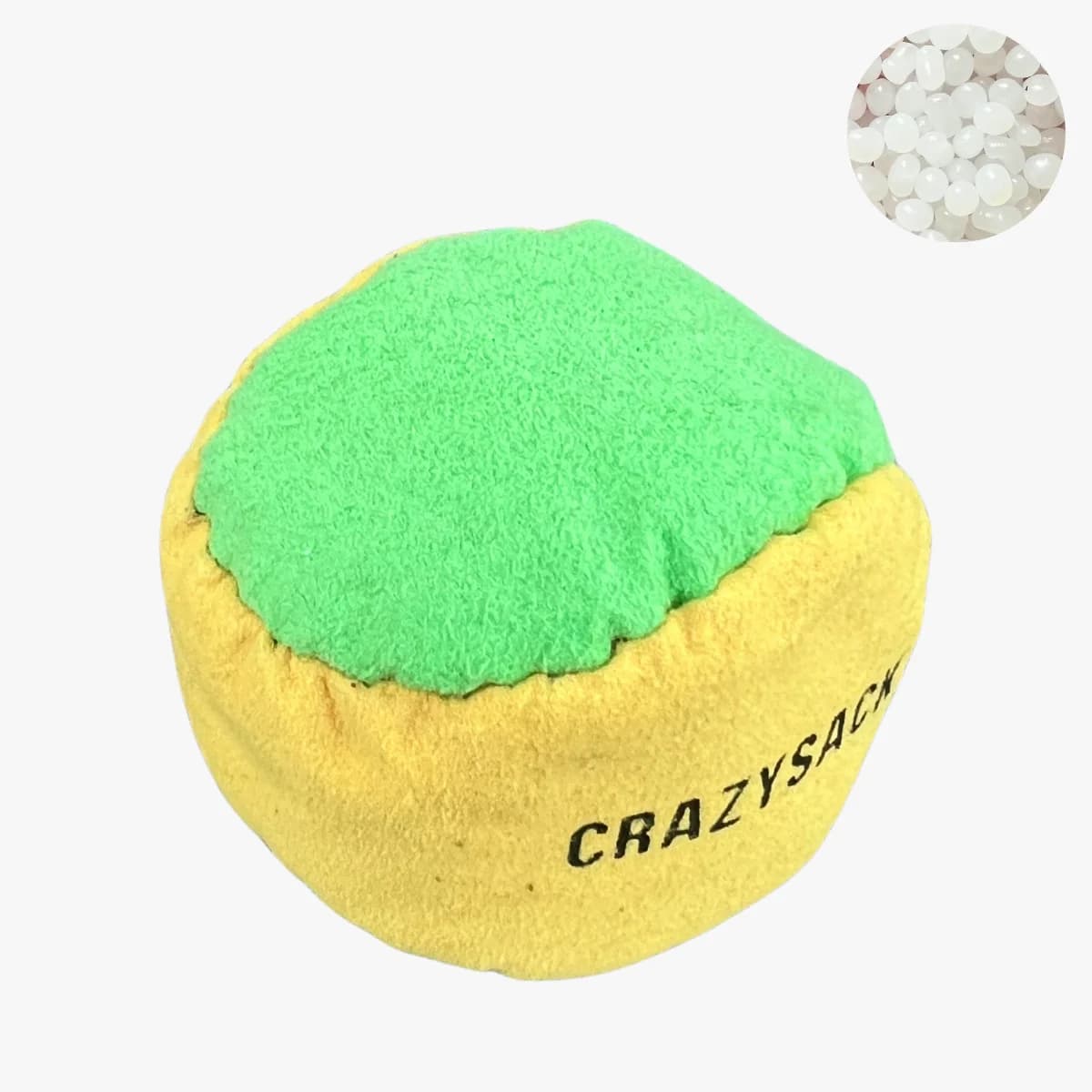
Commercial bags often use small plastic beads in varied sizes and densities. Light players and anyone who wants longevity tend to land here.
Upsides
- Moisture-resistant and long-lived
- Holds bag shape for years
- Light, pleasant kick feel
Downsides — usually pricier than natural fills; plastic footprint if disposal is careless.
Beans and lentils: green DIY picks
Legumes feel soft and moldable — popular for homemade bags and eco-minded players.
Upsides
- Biodegradable and low-impact
- Cheap and pantry-common
- Soft, friendly play feel
Downsides — moisture invites mold; beans can break down and shorten bag life. Store dry.
Rice: budget home fill
Rice sits in the middle for weight and balance — friendly for beginners and casual DIY.
Upsides
- Almost always on hand
- Cheap to top up
- Pleasant mid-weight balance
Downsides — same moisture risk; can crush under hard use. Great for light play and craft projects.
Rubber granulate: bounce and flex
Often found in performance bags — lively rebound and flex for demanding moves. Frequently made from recycled rubber, greener than virgin plastic in many cases.
Upsides
- High bounce and flexibility
- Tough and durable
- Often recycled content
Downsides — harder to source, pricier; can get sticky if stored hot. Unique play feel when you want it.
Which fill fits you?
Match fill to style and care habits. Beginners often start with rice or beans; advanced players lean toward plastic or rubber granulate. Natural fills need dry storage and occasional checks; synthetics last longer with less fuss. DIY makers usually pick rice or lentils for easy swaps.
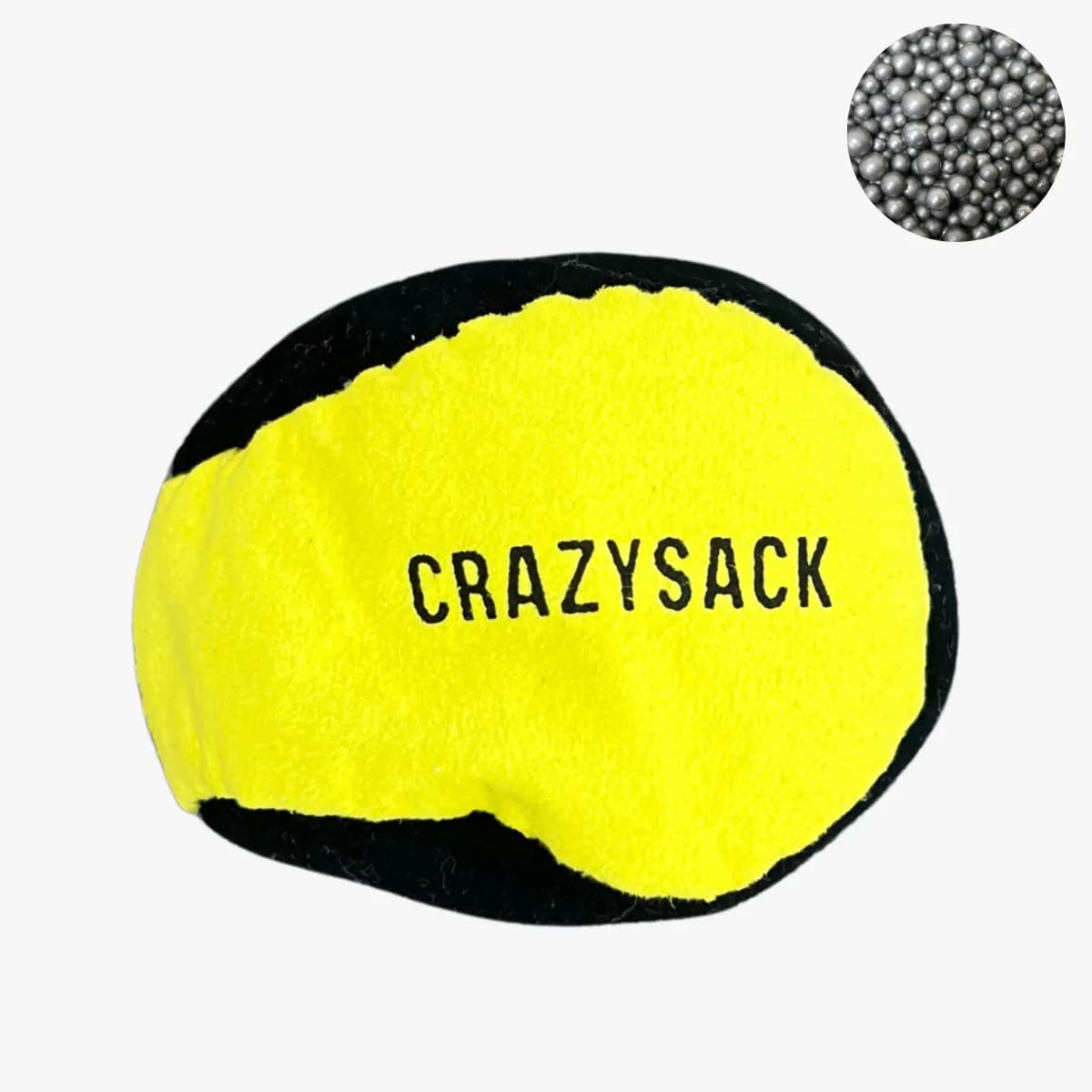
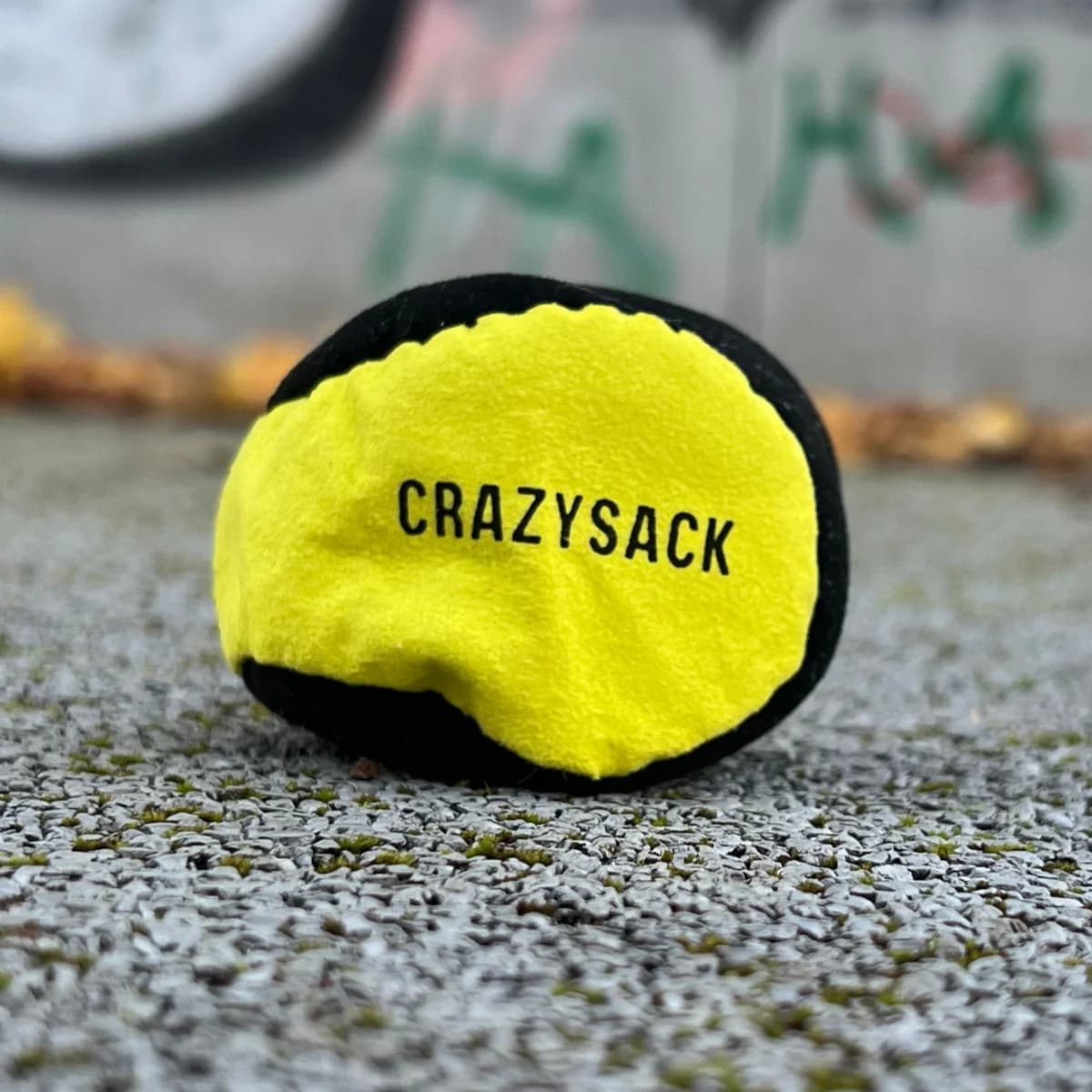
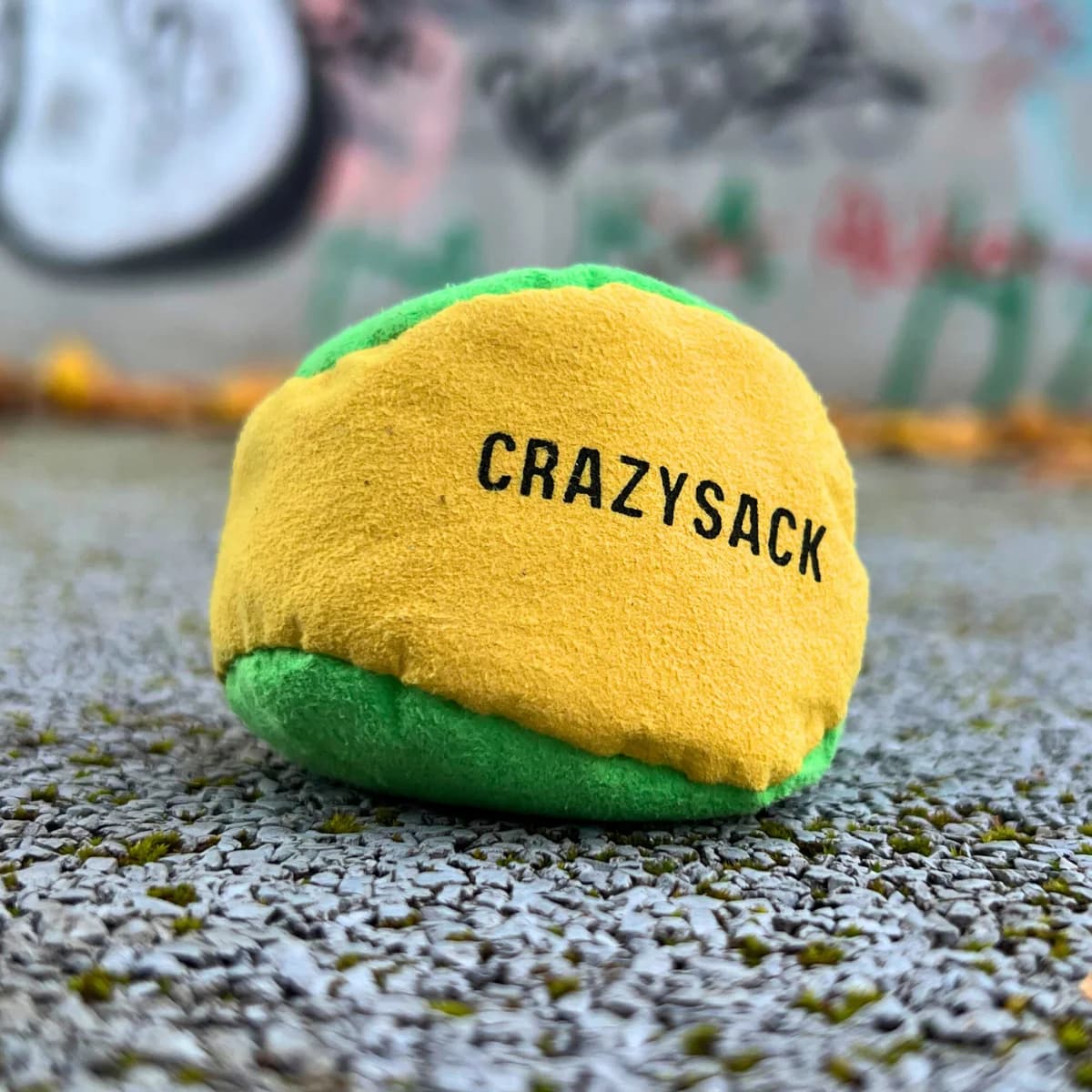
There is no universal winner — try a few and keep what matches your kicks. Ready-filled options across sand, metal, and pellet builds sit in our shop.
Matching footbags from our shop
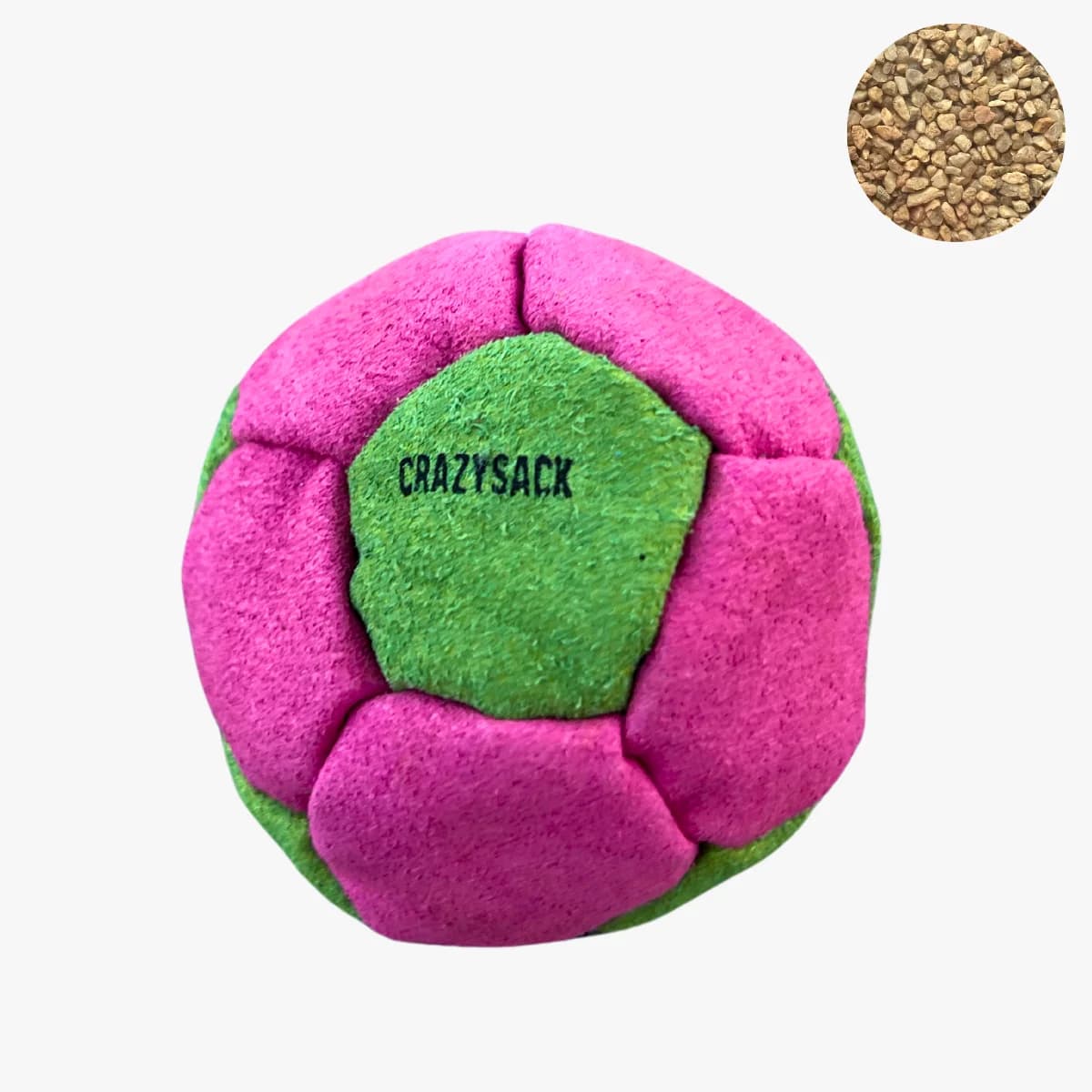
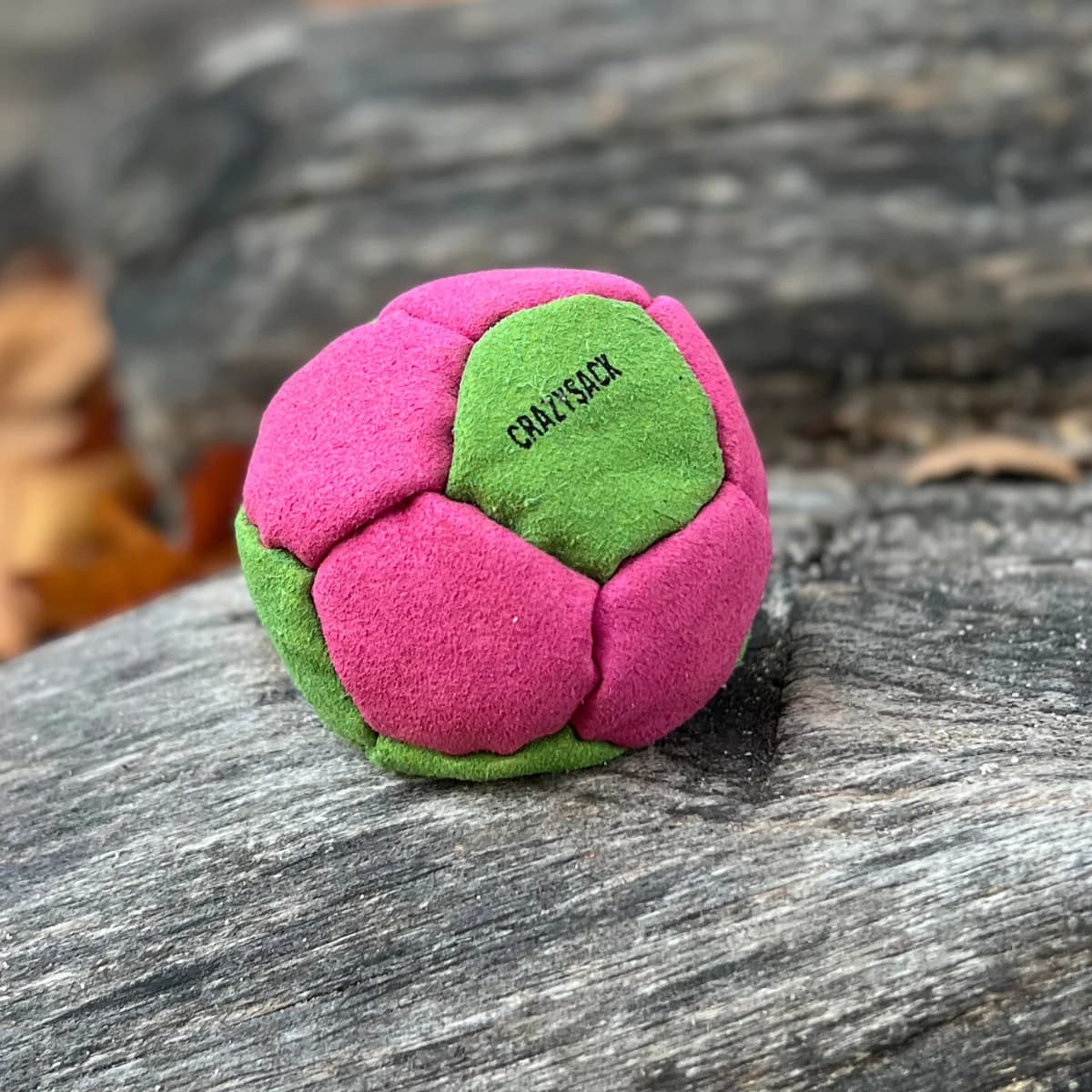
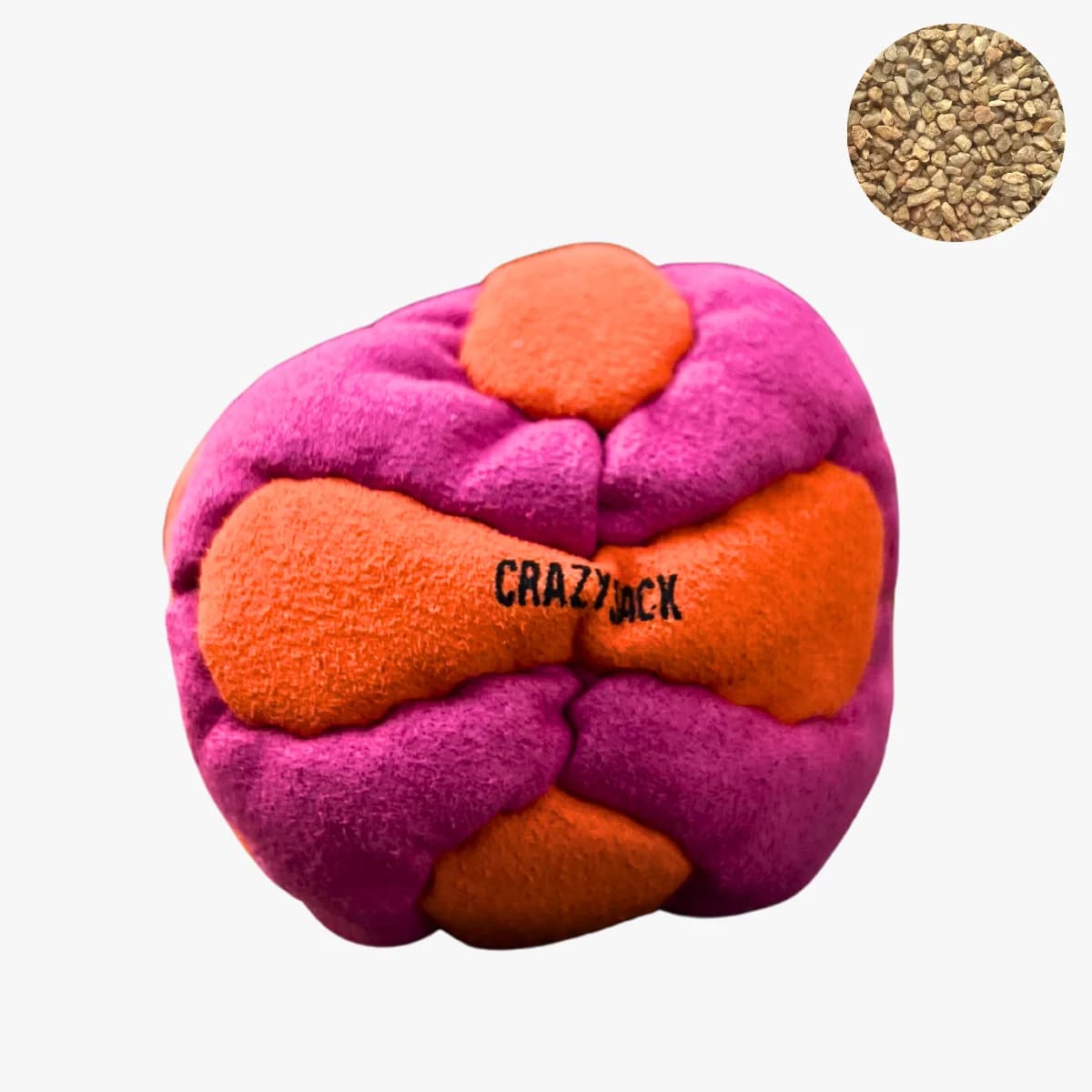
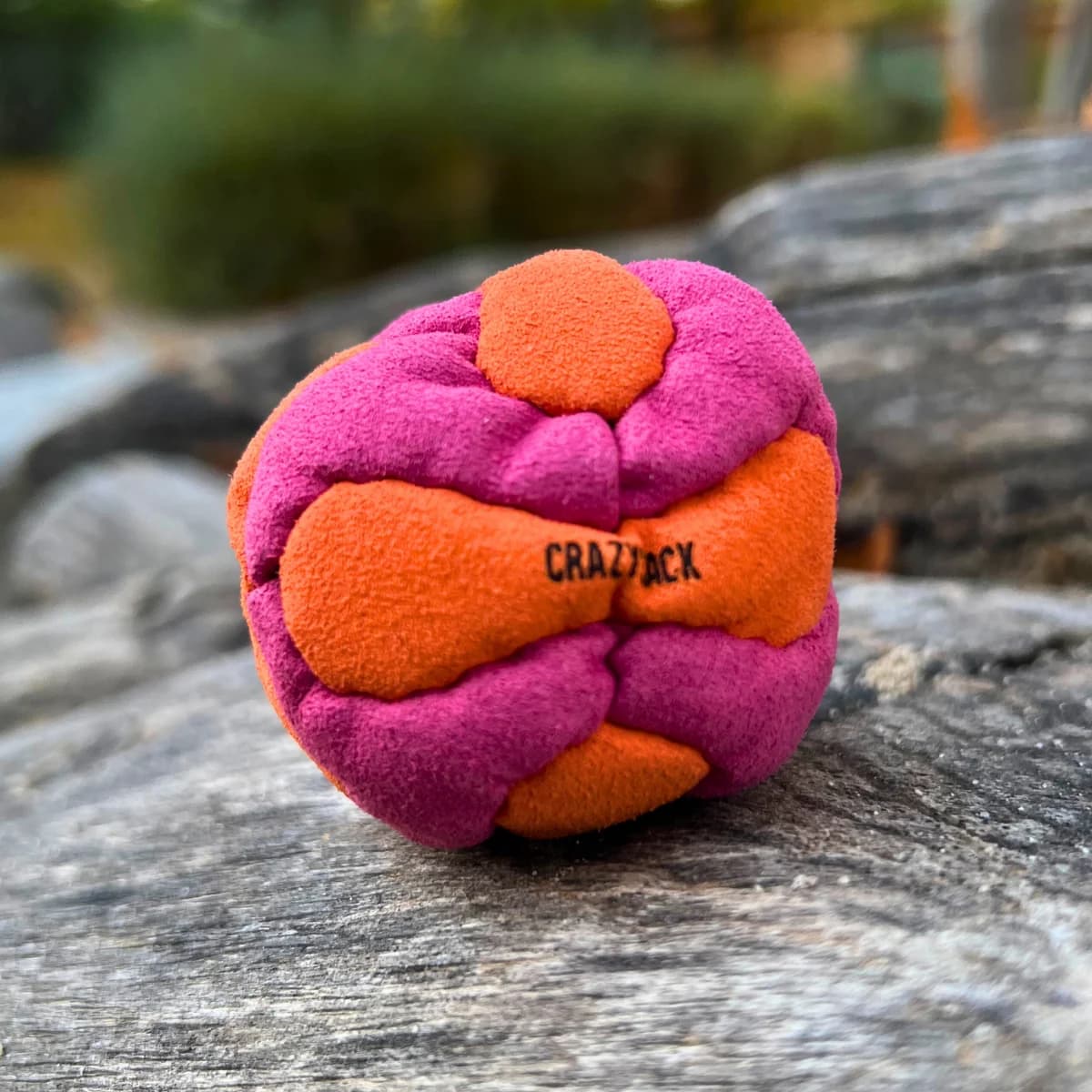
Hand-stitched in Germany, ready to ship.
You might also like
How Hacky Sacks Make Your Evening Wind-Down Calmer
Turn after-work stress into light play: how a footbag helps you switch off, move gently, and reclaim your evenings.
3 min read
Why Footbags Make a Genuinely Rewarding Hobby
Fitness, creativity, community, and almost zero gear — why footbags (hacky sacks) enrich daily life for kids, adults, and families alike.
1 min read
Best Techniques to Kick and Catch a Hacky Sack
Inside and outside kicks, toe stalls, thigh catches, Around the World, Sole Pop — footbag throw-and-catch techniques for beginners and beyond.
2 min read