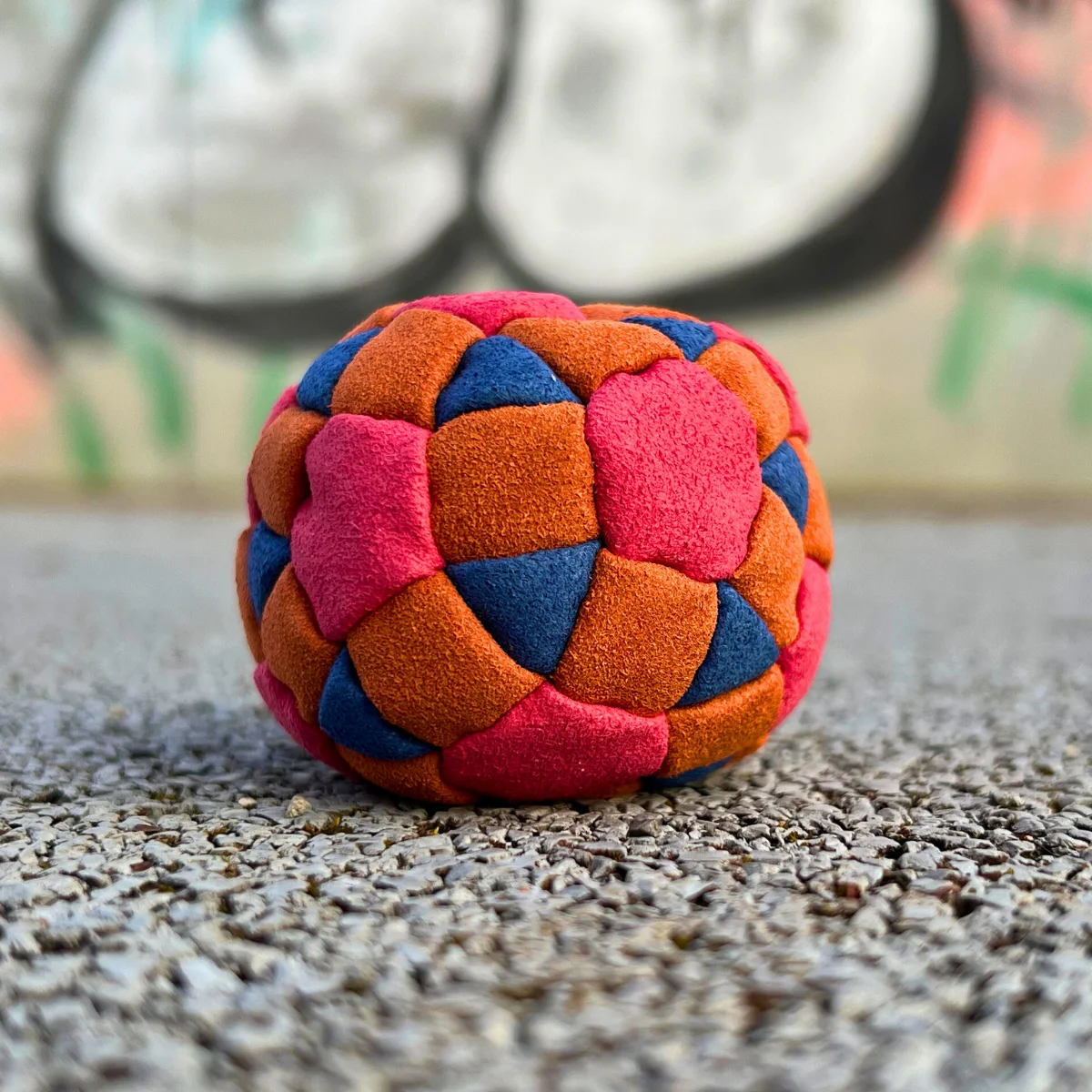
From training aid to street prop
Footbags (hacky sacks) began in 1970s America as coordination trainers. Street performers adopted them for pocket size, light weight, and visual flair. They also sit in urban youth culture — creative, independent, free — values that map cleanly onto open-air art.
Why performers choose them
- Pocketable on long walking days
- Solo or group show formats
- Audience join-in — easy first kicks
- Cheap vs big circus props
- Low injury risk for crowd participation
- Quiet enough for sensitive plazas and transit spots
Weather-flexible and zero-setup: ideal for touring acts, clowns, and acrobats who want playful interaction.
Tricks as expression
Inside kick, clipper, toe stall, spins/jumps, music-synced freestyle lines — skill ceiling is high. Many blend bags with juggling, dance, or beatbox. The bag can lead the act or sit as a modular bit inside a longer set.
Community builder
A bag in the air invites passers-by and other artists into conversation. City jams and informal circles double as audience magnets and idea labs. Inclusive norms (beginners welcome) match the best of street culture.
Symbol of urban freedom
Playable on asphalt, grass, courtyards, squares — art where people already are. For some younger acts the bag is also a soft statement against over-scheduling and screen-only leisure: body, focus, public space.
Side income
Fast setup helps rotate pitches. Custom bags sold after shows, tip-based mini-workshops, short viral clips for brand deals, YouTube tutorials, and online courses turn the prop into a small business stack.
Closing
Versatile, mobile, and camera-friendly — footbags have earned a permanent place in street performance. Lifestyle, community, and livelihood can share one soft sphere. Performance-ready bags: our shop.
Matching footbags from our shop
Hand-stitched in Germany, ready to ship.





You might also like
How Hacky Sacks Make Your Evening Wind-Down Calmer
Turn after-work stress into light play: how a footbag helps you switch off, move gently, and reclaim your evenings.
3 min read
Why Footbags Make a Genuinely Rewarding Hobby
Fitness, creativity, community, and almost zero gear — why footbags (hacky sacks) enrich daily life for kids, adults, and families alike.
1 min read
Best Techniques to Kick and Catch a Hacky Sack
Inside and outside kicks, toe stalls, thigh catches, Around the World, Sole Pop — footbag throw-and-catch techniques for beginners and beyond.
2 min read