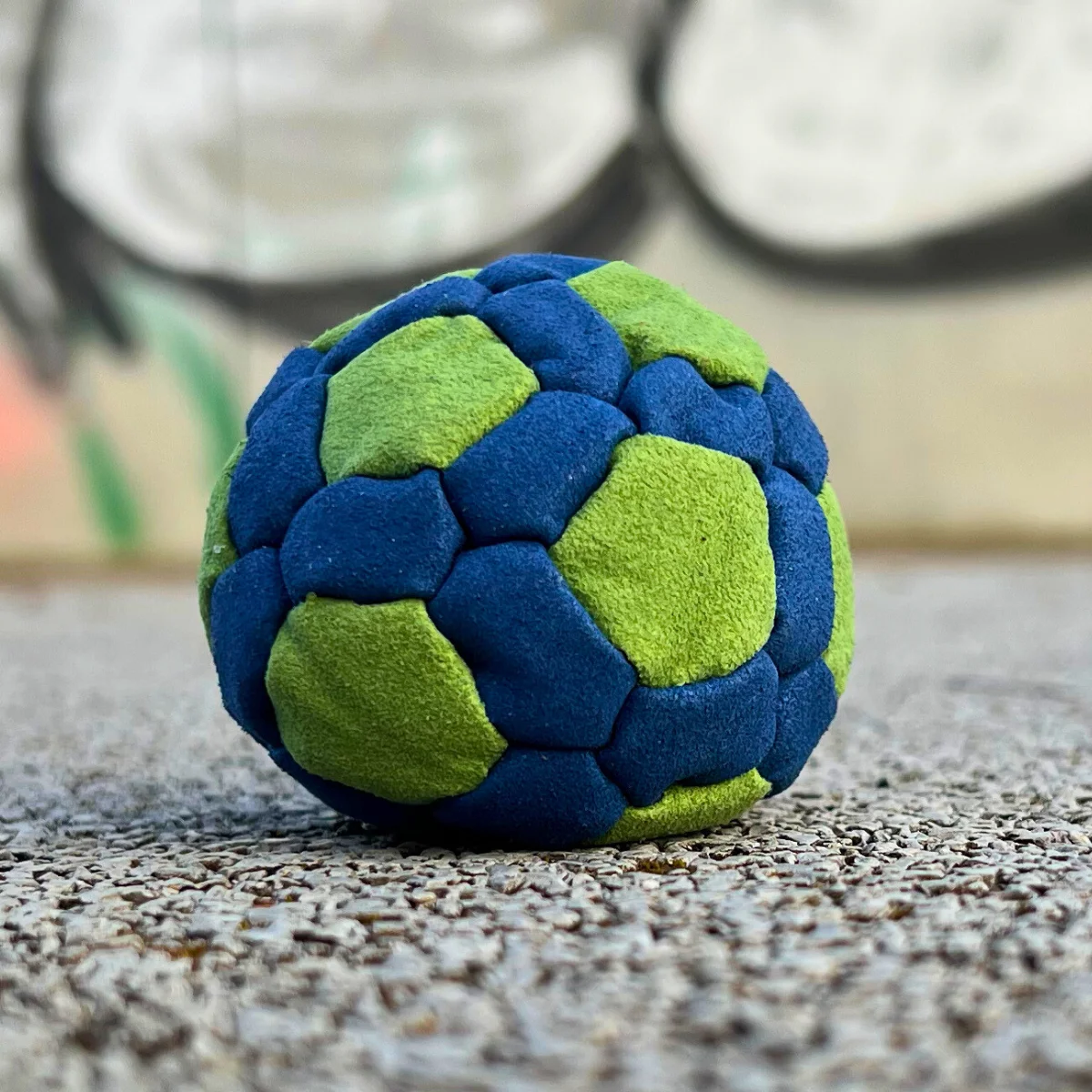
Hacky sacks are not all the same size or heft
A hacky sack (footbag) is a small filled pouch kept aloft mainly with the feet. Since the 1970s it has grown from park pastime to organised freestyle, circle, and net play. Bags differ in shell, fill, stitching — and crucially in weight and size. Those two numbers change control, difficulty, and which discipline the bag suits.
Why weight matters
Flight and control
Lighter bags move quickly and punish late reactions — especially for beginners. Heavier bags travel more slowly, giving you time to set a stall or a clean second kick. Wind also bullies light bags more outdoors.
- Light (<40 g) — snappy tricks, harder to tame
- Mid (40–60 g) — best compromise for most learners and all-round play
- Heavy (>60 g) — freestyle stalls and precise work
Start mid-weight; specialise once you know whether you want speed or parked control.
Fill changes the number on the scale
Plastic pellets, metal beads, sand, rice — each shifts both grams and feel. Metal adds mass and firm shape; sand stays mouldable for control; ultra-light synthetic fills in cheap bags often frustrate serious practice. Some premium bags blend fills (or chambers) to tune inertia.
How size changes the game
Foot contact
Smaller bags demand accuracy; larger ones are easier to hit — helpful early on, clumsy for advanced links. Typical diameters sit around 5–6 cm.
- Small (~4 cm) — precision freestyle
- Mid (5–6 cm) — all-round
- Large (>6 cm) — beginners and casual circles
Foot size matters too: smaller feet often prefer a slightly smaller target; larger feet can manage more volume.
Shape stability and panels
Smaller, tightly sewn bags stay rounder longer. Larger, loosely built bags balloon with play. Panel count (4, 8, 14, 32…) pushes the bag toward a sphere — freestyle likes many panels; casual circle play is fine with simpler cuts.
The sweet spot: weight × size
Rules of thumb
- Beginners: ~5.5–6 cm, 45–55 g
- Intermediate: ~4.5–5 cm, 55–65 g
- Advanced: discipline-specific (freestyle vs net)
A widely useful all-rounder is about 50–60 g at ~5 cm. Trying two bags teaches more than any chart.
By discipline
- Freestyle — heavier, smaller, mouldable for stalls
- Footbag net — a bit lighter, form-stable, lively
- Circle / casual — mid size and weight
Surface and wind matter: soft grass can take more weight; asphalt wants tougher shells.
Buying tips beyond the numbers
Shells range from synthetic suede (grippy) to microfibre (tough) to cotton blends (soft, moisture-sensitive). Look for dense stitching and clear specs: weight, diameter, fill. Online, read those numbers before colour. Owning two bags for weather and mood is normal, not excess.
See listed weights and fills in our shop when you are ready to match a bag to this guide.
Bottom line
Weight and size are not cosmetics — they set how hard the bag is to learn and how far you can push freestyle. Pair them with your level and discipline, and the next purchase stops being a guess.
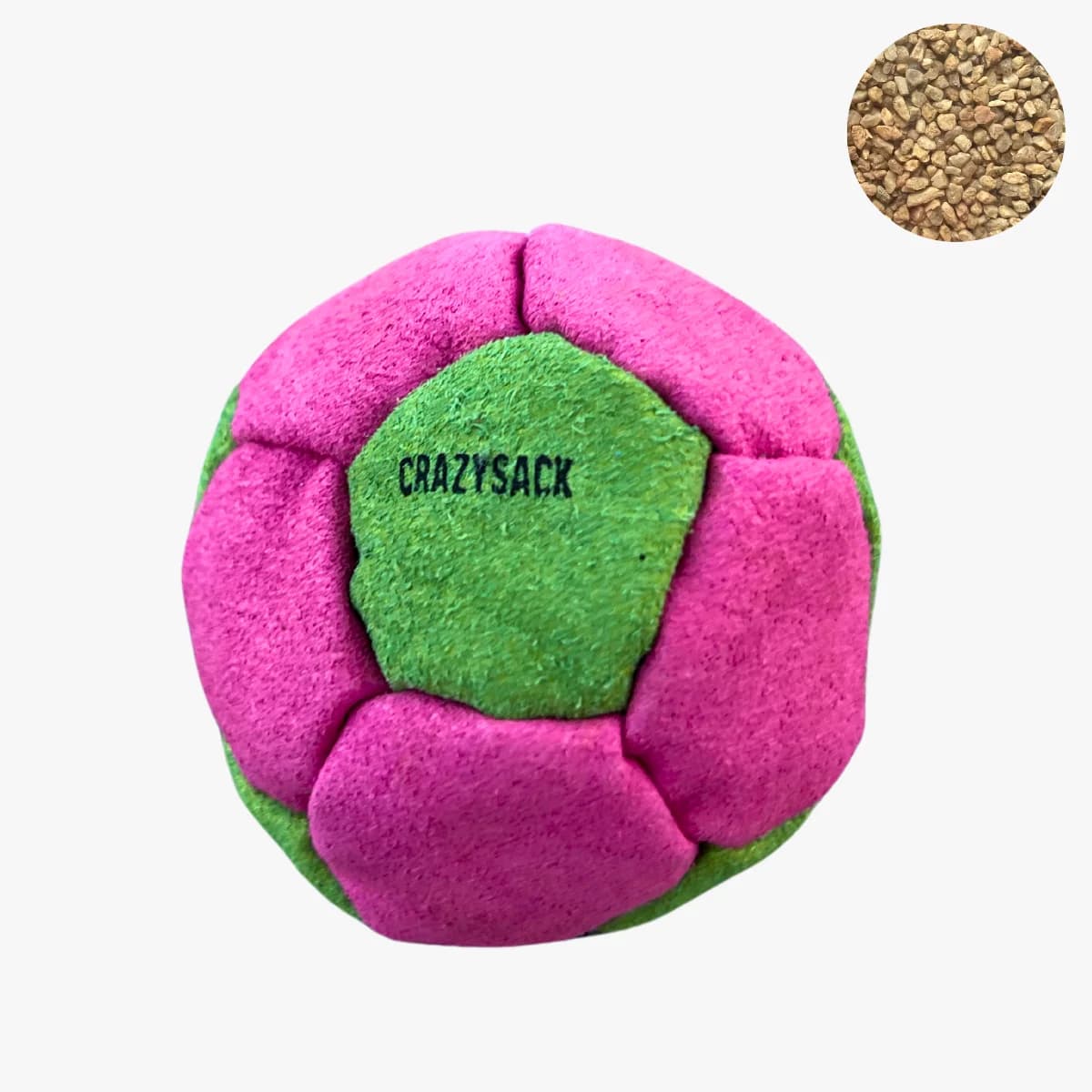
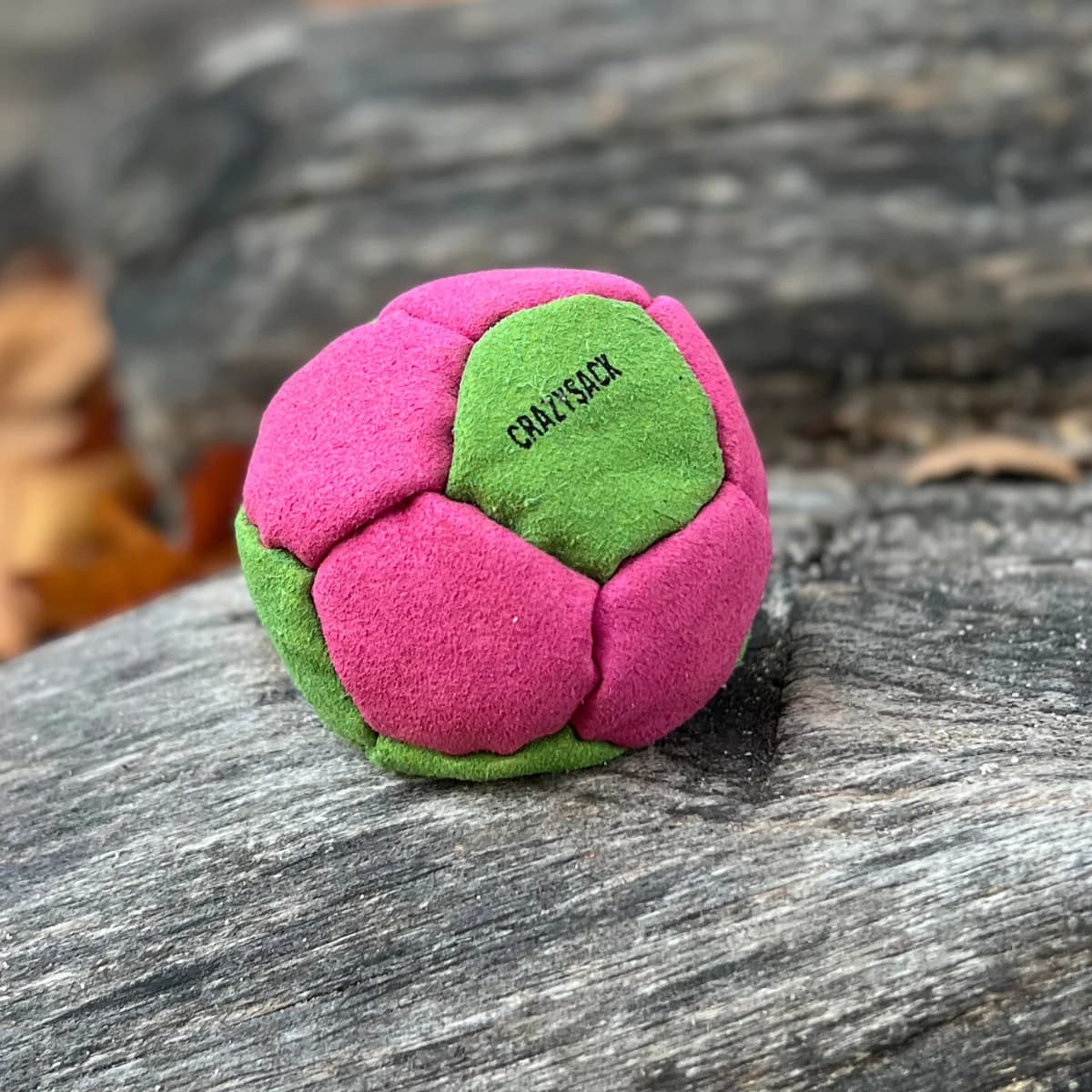
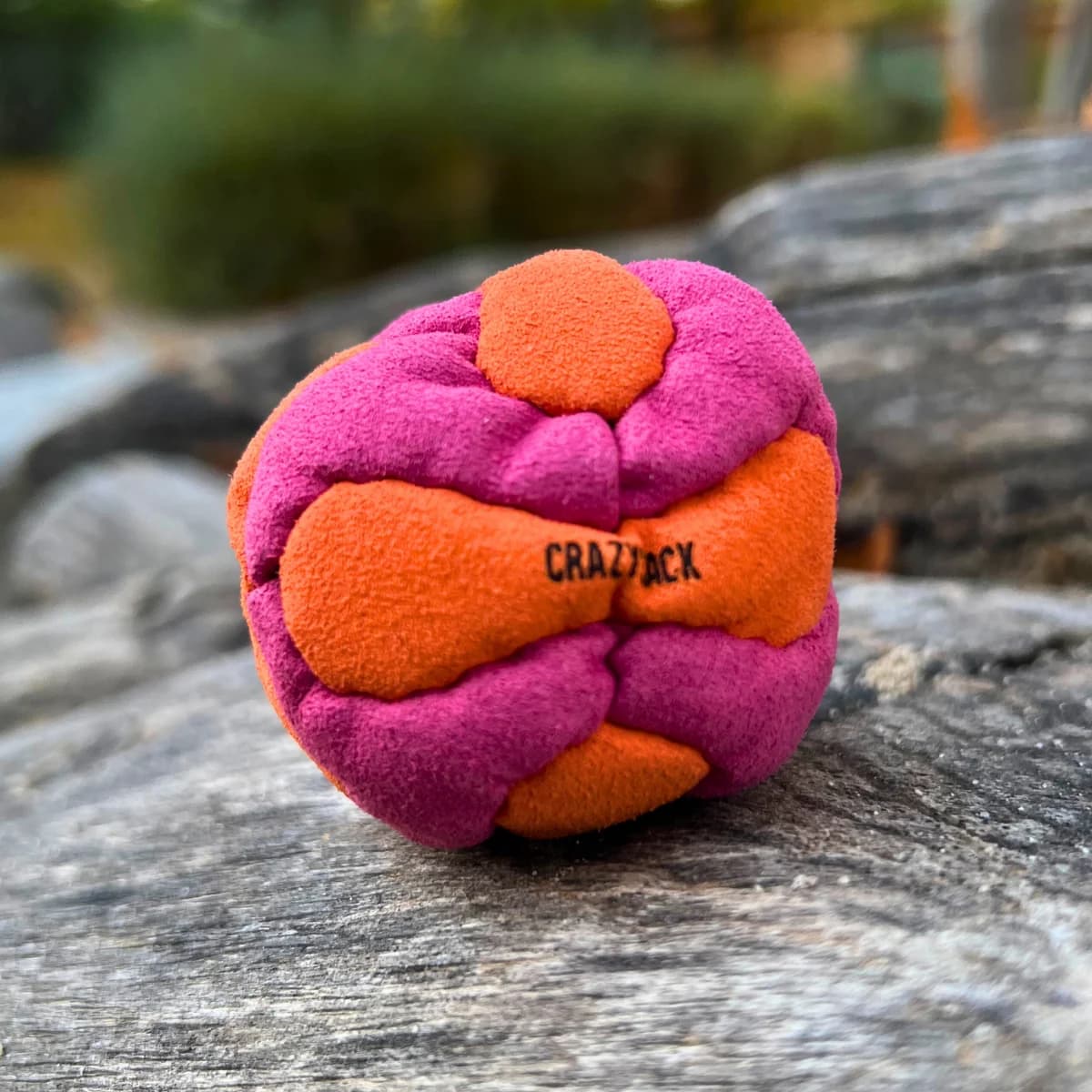
Matching footbags from our shop
Hand-stitched in Germany, ready to ship.


You might also like
Why Foot Position Matters in Hacky Sack
How proper foot position improves control, precision, and injury prevention in footbag — basics, common errors, drills, and shoe tips.
2 min read
Ideal Footbag Weight: What Actually Matters
How light, mid, and heavy footbags feel in play — fill, cover, and skill level tips so you pick a weight that helps your tricks, not fights them.
3 min read
How Hacky Sacks Make Your Evening Wind-Down Calmer
Turn after-work stress into light play: how a footbag helps you switch off, move gently, and reclaim your evenings.
3 min read