
Why weight matters
The weight of your footbag (hacky sack) shapes control, comfort, and how fast you improve. Beginners often overlook it; players at every level feel the difference.
- Too light: hard to track, easy to overkick, slower technique progress
- Too heavy: harsh on the feet over time, and risky with bad form
- Balanced: cleaner contact and smoother movement
Preference, experience, and whether you freestyle or circle all matter. The right weight makes sessions feel easier, not harder.
Weight ranges
Bags run from a few dozen grams to over 100 g. Rough bands:
Light (under 40 g)
Good for beginners who want quick feet, or for fast trick work.
- Suits jumps and rapid footwork
- Gentler on the feet
- Fine indoors or early practice
Outdoors in wind, light bags wander. Expect less “presence” under the foot.
Midweight (40–70 g)
The usual sweet spot — control without feeling like a brick.
- Works for beginners and intermediate players
- Fine for solo tricks and circle play
- Enough mass to feel, not enough to punish
Best default if you want one bag for most sessions.
Heavy (over 70 g)
For experienced players chasing slow, precise work or outdoor stability.
- Favors controlled, deliberate tricks
- Loads the foot muscles more
- Holds up better against wind and rough ground
Use careful technique; sloppy hard kicks with a heavy bag invite sore feet.
How fill and cover change the feel
Weight is not only a number — fill and shell decide how the bag sits and flies.
Fills
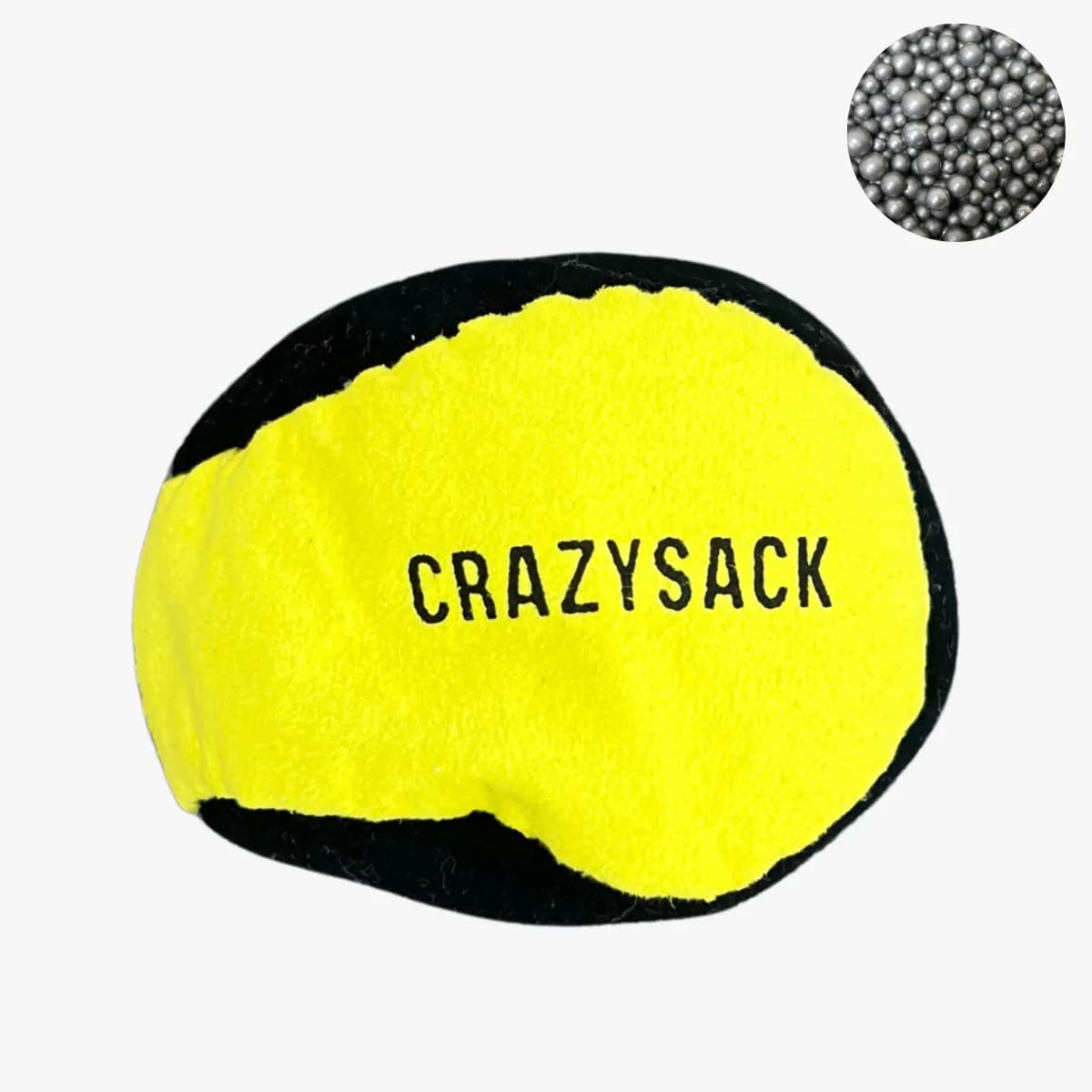
- Plastic pellets: Light, cheap, weather-friendly — common starter fill
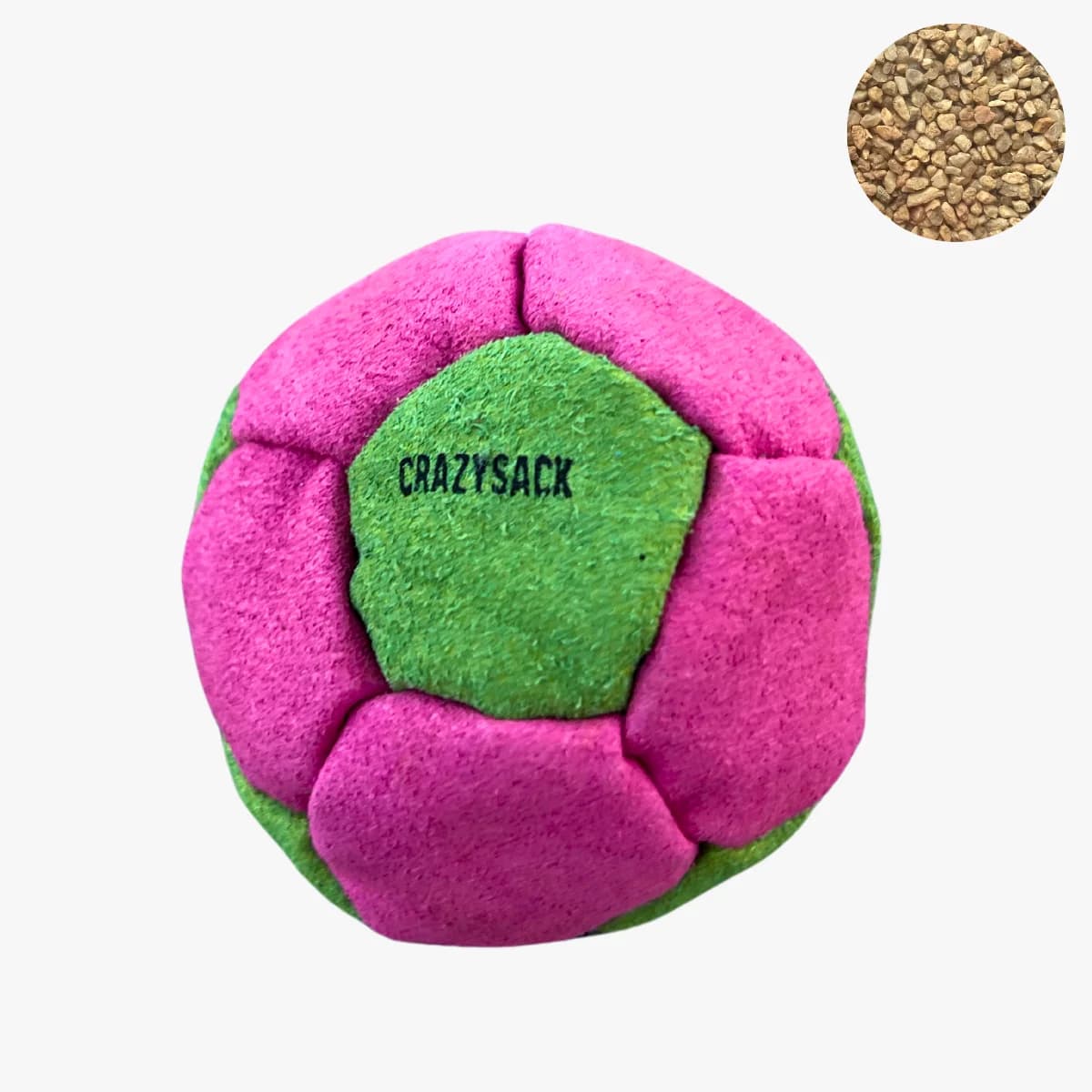
- Sand: Heavier, steadier, popular with trick players who want a planted stall
- Metal beads: Very heavy; niche for advanced training, not everyday circle play
Match fill to skill and where you play.
Covers
- Cotton / fabric: Light, flexible, durable for mid to heavier bags
- Synthetic leather: Tough, water-resistant, often a bit heavier — solid outdoors
- Genuine leather: Premium feel and longevity, common on competition-minded bags
Comfort and lifespan matter as much as grams on a scale.
How to choose your ideal weight
By experience
- Beginners: light to midweight while you learn contact
- Intermediate: midweight for mixed control and stability
- Advanced: vary weight by goal — heavy for slow precision, lighter for speed
The better you get, the more you can switch bags by session.
By play style
- Fast tricks and footwork → lighter
- Control and clean stalls → midweight
- Windy outdoors → heavier
By testing
Borrow or buy a few weights. Play indoors and out. Trust what feels natural and fun — that is usually the right answer.
Browse by panels and fill in our footbag shop if you want options side by side.
Wrap-up
Ideal weight depends on skill, style, and surface. Light bags suit early tricks; midweight covers most players; heavy bags reward experience and outdoor play. Factor in material, then experiment. A well-matched footbag will not make you a freestyler overnight — but the wrong one will fight you every kick.
Matching footbags from our shop
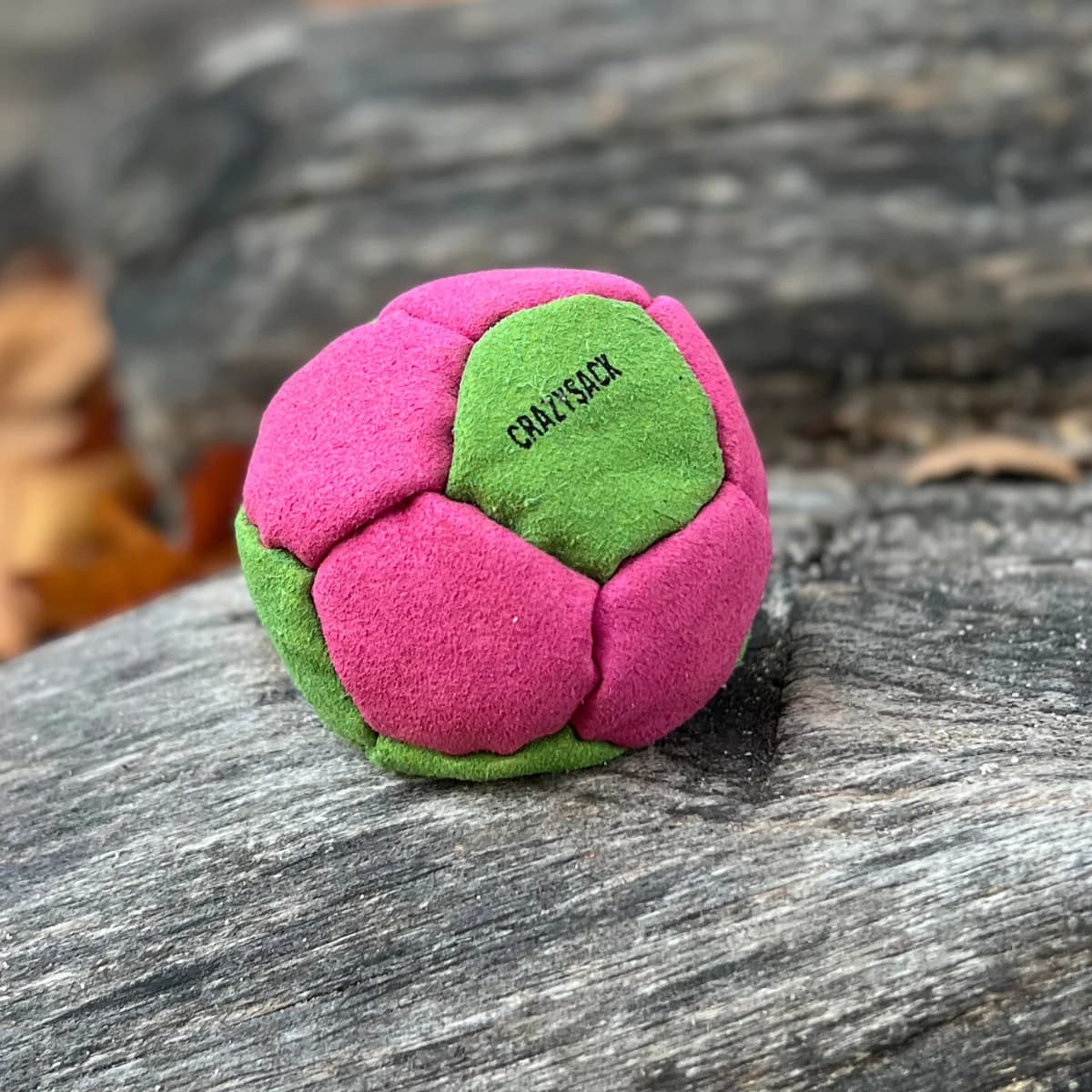
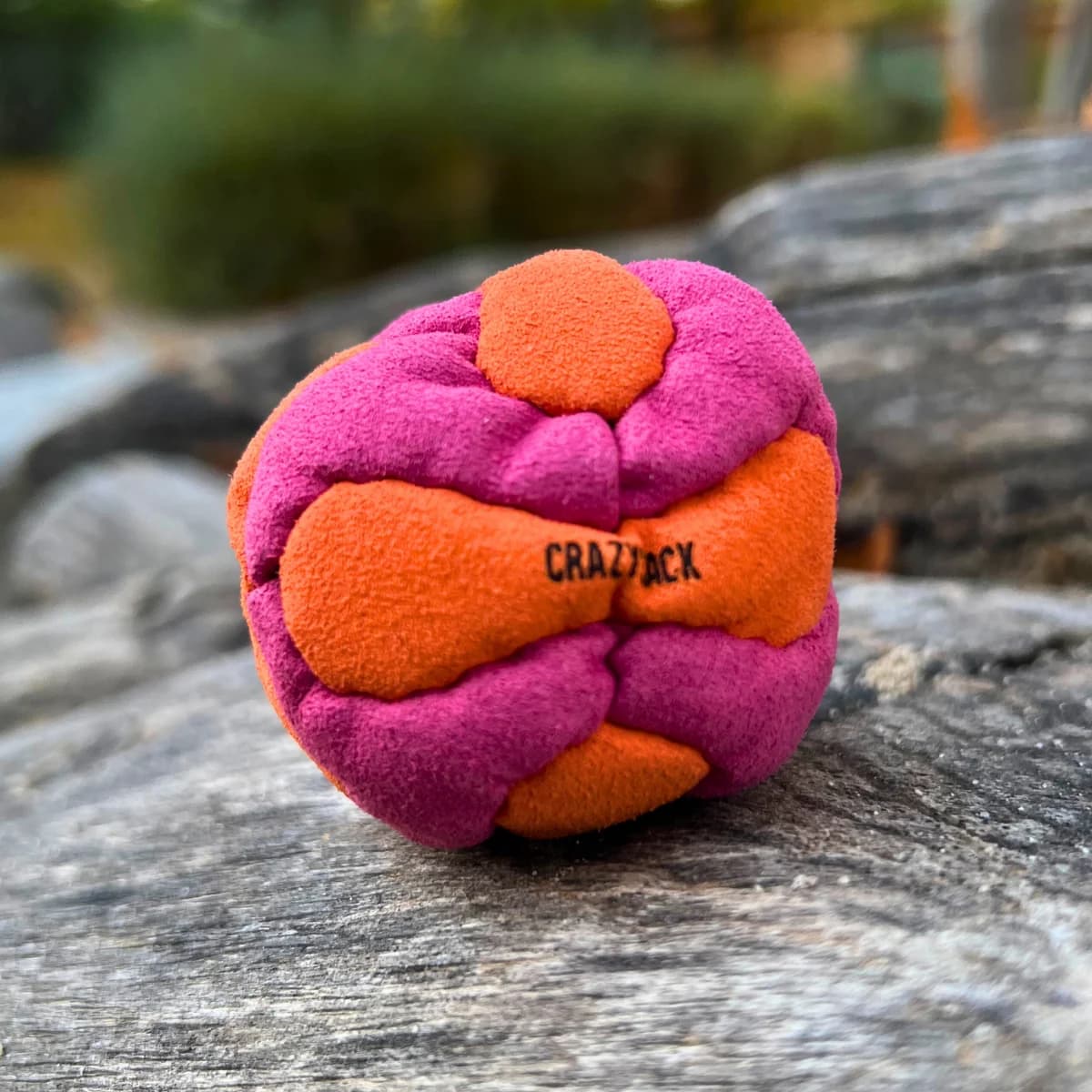
Hand-stitched in Germany, ready to ship.


You might also like
Why Weight and Size Matter in Hacky Sacks
How footbag weight and diameter change flight, stalls, and learning curve — pick a hacky sack sized for your style, not just for looks.
3 min read
Why Footbags Are Ideal Activities for Children
Footbags as a screen-break for kids — motor skills, balance, social play, and easy ways to use them at school and at home.
1 min read
How Hacky Sacks Make Your Evening Wind-Down Calmer
Turn after-work stress into light play: how a footbag helps you switch off, move gently, and reclaim your evenings.
3 min read